

This Week in Farming: Lambing tips, record crops and TB
 © Tim Scrivener
 Welcome back to another edition of This Week in Farming, your regular round-up of best Farmers Weekly content from the past seven days.
First, here are your market prices (opens as PDF). It has been a fairly steady week for most crop and livestock prices with milling wheat lifting slightly to £174.5/t.
However, prices were anything but steady at Stirling Bull Sales on 1 and 2 February, where an Aberdeen Angus bull sold for 60,000gns, matching a record set back in 1963.
Now, on with the show…
About the author

Slow progress on TB
Bovine TB topped the FW news agenda this week, amid growing concerns over a lack of concrete progress on Defra’s refreshed bovine TB strategy for England.
It had been billed as a “top priority” by former farming minister Daniel Zeichner. However, badger culls have now ended in 20 of the 21 zones, despite little progress on a vaccine.
Dairy in the doldrums
Speakers at Dairy-Tech in Warwickshire on 4 February suggested it may be a long road to recovery for the dairy sector, with further price cuts announced and no major price rallies expected until the second half of the year.
Farmers Weekly Question Time took place at the show, focusing on improving business resilience to combat price shocks and the role of dairy contracts.
In this week’s leader column, FW editor Andrew Meredith pondered the idea that better communication between producers and buyers could help to alleviate some of the recent milk price volatility.
A feature in the magazine on building resilience through collaboration delved into this topic in more detail, with dairy producer organisations playing a key role in negotiations with processors.
It’s not all doom and gloom for the dairy sector, though, with antimicrobial usage falling further in UK dairy herds.
Cornish dairy farmers Paul Broad and Irwin Morrow will also be feeling more upbeat after winning the RABDF Gold Cup award.
Finally, if you are looking for a relief milker, there’s one lady who may be up for the job… Marie Stephenson, who plans to milk 10,000 cows on a journey from Scotland to Cornwall this August in aid of farming charity Rabi.
NFU Scotland stays vocal on IHT
FW’s chief reporter Philip Case has been in Glasgow covering a flurry of news stories from the NFU Scotland (NFUS) annual conference.
NFUS president Andrew Connon told delegates the inheritance tax (IHT) reforms had “shaken the industry” and stressed that the NFUS remains opposed to the reforms and would continue to highlight the “ongoing injustices”.
The union also called for urgent reform of UK food labelling rules and stronger checks on imports to reduce the risk of African swine fever coming to the UK.
NFUS also launched its 2026 manifesto, which asks for government to include ring-fenced funding for farming and crofting, and a fair transition to the new agricultural support system.
Lambing learnings and shearer shortage
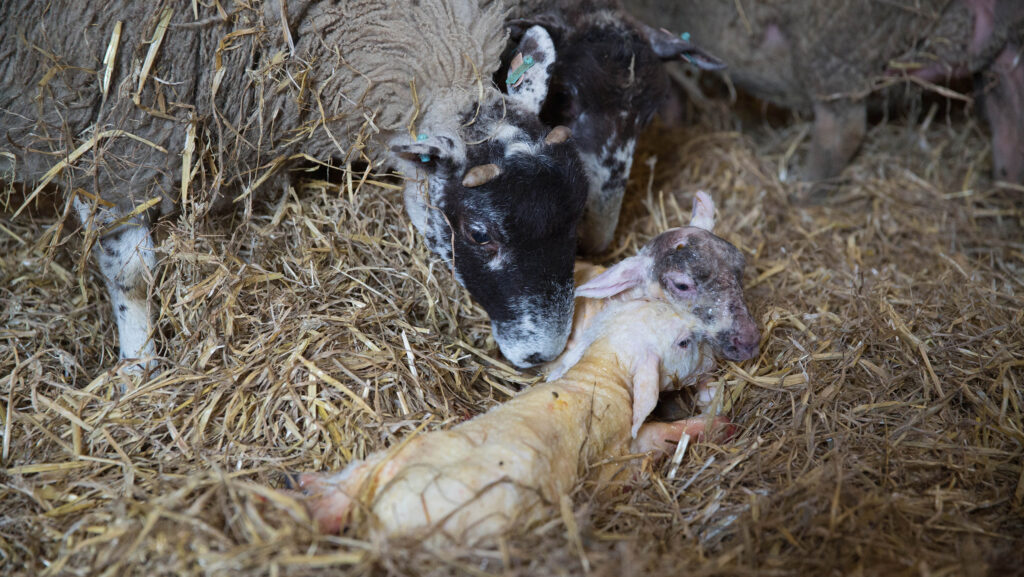
The FW Livestock team have been out on farm pulling together a lambing special, packed with advice on keeping flocks healthy:
- Practical advice on reducing lamb losses from joint ill
- Why early weaning should be the exception, not the rule
- How recording lamb losses led to better flock performance.
Meanwhile, Nottinghamshire County Council earned praised for running a pre-lambing campaign on sheep worrying, urging the public to keep dogs under control near livestock.
Farmer-owned co-operative Farmers First announced plans to lease out its Wrexham abattoir as part of a restructure of its business operations due to “ongoing challenging trading conditions”.
Finally, shearing may a long way away with lambing still in the early stages and the rain showing no mercy, but a Home Office decision to block visa-free entry for overseas sheep shearers has raised concerns of a potential shortage of shearers.
Top of the crops
Lincolnshire grower Tim Lamyman has reclaimed the world-record oilseed rape yield, with a remarkable 7.71t/ha crop. Full details were shared at the recent YEN conference.
Defra’s consultation on contract fairness across the combinable crops sector has now closed, with the NFU seeking sampling improvements in future contracts, and Frontier Agriculture calling for clearer contracts and a “proportionate approach” from government.
Potato processor McCain is launching a 200ha Farm of the Future to carry out commercial-scale projects and drive innovation in the potato sector.
Meanwhile, GB Potatoes is asking for responses to a new Potato Industry Confidence Survey to gauge production trends, sentiment, and the future of the potato sector.
Still on spuds, the FW Arable desk looks into the role of cover crops in nitrogen management for potatoes.
Best of the rest
- Where now for the tenanted farm sector?
- MPs wary of SPS fallout as EU talks resume
- Ancient objects uncovered beneath Britain’s farming fields
- New health hub lorry for North Wales farmers
- Adapted Spread-A-Bale Combi-Bale feeds and beds
Listen to the FW Podcast
Don’t forget to tune in to the Farmers Weekly Podcast, available anywhere you listen to podcasts, or free to listen to on the FW website.